WAGNER F38263 Nos Parking Brake Cable Transmission
fits model: Std. make: Desoto, Dodge, Plymouth. year: 1957-58.
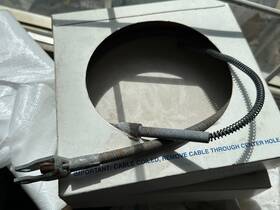
( Brand: Wagner ), ( Manufacturer Part Number: F38263 ), ( Type: Parking Brake Cable ), ( Country Of Origin: United States )
Review WAGNER Nos Desoto Dodge Plymouth Parking Brake Cable Transmission fits STD 1957-58
The **Wagner F38263 NOS (New Old Stock) 1957-1958 Desoto, Dodge, and Plymouth Parking Brake Cable for Standard Transmission** is a meticulously preserved, high-quality aftermarket component designed to restore authenticity and functionality to classic American muscle cars from the late 1950s. Crafted from durable, corrosion-resistant materials, this parking brake cable is a direct replacement for the original equipment found in these iconic vehicles, ensuring a perfect fit and seamless integration into the brake system. The cable features a robust, hand-forged construction with a smooth, polished finish that reflects the meticulous attention to detail characteristic of Wagner s reputation for excellence in automotive restoration. Whether you re working on a sleek 1957 Desoto Fireflite, a rugged Dodge Power Wagon, or a sporty Plymouth Belvedere, this NOS cable delivers the same reliable stopping power and smooth operation as the factory-installed part, complete with the original packaging and minimal wear to preserve its vintage charm. Ideal for enthusiasts seeking to maintain or enhance the authenticity of their classic ride, this cable is a must-have for any restoration or maintenance project, offering both performance and historical accuracy in one compact yet essential component.
### Pros and Cons of Buying a 1957-58 Desoto/Dodge/Plymouth with a Standard Transmission and Parking Brake Cable
#### **Pros:**1. **Classic American Muscle Appeal** These cars are iconic from the mid-20th century, embodying the golden era of American automotive design. They hold strong collector value and are highly sought after by enthusiasts.
2. **Mechanical Simplicity** Standard transmissions are generally easier to repair and maintain than automatics, especially for those with basic mechanical knowledge. Fewer components mean fewer things can go wrong over time.
3. **Driving Experience** The manual transmission provides a more engaging and hands-on driving experience, which many collectors and enthusiasts prefer. The direct connection between driver and engine enhances enjoyment.
4. **Potential for Restoration** These cars are relatively common enough that parts are available, but rare enough that well-preserved examples can appreciate in value. A well-done restoration can yield a highly desirable project or show car.
5. **Lower Running Costs (Compared to Modern Cars)** Basic maintenance (oil changes, brake pads, etc.) is often cheaper than on modern vehicles, though labor costs may be higher due to specialized knowledge required for vintage cars.
6. **Community and Support** There are active clubs and forums (e.g., Mopar, Desoto/Dodge enthusiast groups) where owners can find help, parts, and camaraderie. This makes troubleshooting and restoration more accessible.
7. **Historical Significance** These models represent a transitional period in automotive history, bridging the gap between post-war simplicity and the coming era of muscle cars. Owning one allows you to be part of automotive heritage.
---
#### **Cons:**1. **High Maintenance Requirements** Vintage cars, especially those with high mileage, often require frequent and meticulous maintenance. Rust, worn-out suspension, and outdated electrical systems are common issues.
2. **Parts Availability and Cost** While parts exist, some may be expensive or difficult to source, particularly for less common models or rare components (e.g., specific carburetors, gauges, or interior trim). Replicas or aftermarket parts may be necessary, which can compromise authenticity.
3. **Driving Limitations** Modern traffic, highways, and safety standards were not designed with these cars in mind. They lack modern safety features (airbags, stability control, etc.), and their performance may not meet contemporary expectations (e.g., acceleration, braking, or fuel efficiency).
4. **Insurance Costs** Classic cars can be insured through specialty providers, but premiums are often higher than for modern vehicles due to their value and potential risks (e.g., theft, fire, or accident damage).
5. **Reliability Concerns** Even with regular maintenance, these cars are prone to mechanical failures. Issues like leaking radiators, failing water pumps, worn-out clutch components, or electrical gremlins can arise unexpectedly.
6. **Driving Challenges** Modern drivers may find the driving experience uncomfortable or impractical. Features like manual windows, non-power steering, and limited visibility can make daily use tedious. Parking and maneuvering in tight spaces can also be difficult.
7. **Depreciation Risk** While some classics appreciate, others depreciate if not well-maintained or if the market shifts. A poorly restored or neglected example may lose value over time.
8. **Time and Commitment** Owning a vintage car requires significant time for maintenance, storage, and occasional driving. It s not a "set it and forget it" vehicle; it demands active involvement.
---
### **Conclusion:**Buying a 1957-58 Desoto/Dodge/Plymouth with a standard transmission and parking brake cable is a rewarding but challenging endeavor. These cars are ideal for enthusiasts who appreciate mechanical craftsmanship, history, and the thrill of restoring or maintaining a piece of automotive heritage. However, they are not practical for casual drivers or those seeking a hassle-free vehicle. The key to success lies in thorough research, budgeting for maintenance, and either restoring the car to showroom condition or embracing it as a project with realistic expectations.
If you are passionate about vintage automobiles, have the time and resources to dedicate to its upkeep, and enjoy the process of working on a car, this purchase can be incredibly fulfilling. If you prioritize convenience, modern safety, or low maintenance, a vintage car may not be the best fit.
### **Recommendation:**- **Buy if:** You are an experienced or willing-to-learn mechanic, have storage space, and view this as a long-term project or hobby. Consider starting with a lower-mileage example (under 50,000 miles) with a known service history to minimize surprises.
- **Avoid if:** You need a reliable daily driver, lack the time or budget for maintenance, or are not passionate about vintage cars. In that case, focus on a modern vehicle or a more modern classic (e.g., a 1970s-1980s Mopar with an automatic) that balances nostalgia with practicality.
- **Alternative Approach:** If you love the era but want something more manageable, consider a later model (e.g., 1960s) with an automatic transmission or a well-documented restoration project where much of the work has already been done.
Details:
Being offered is a new old stock front hand lever brake cable, Wagner part number F-38263. According to my catalogs, it measures 72 1/4 inches long with 62 of conduit. Other countries, please inquire. Lock: brake cable shelves It is shown fitting 1957 and 1958 Dodge, Plymouth Desoto as well Chrysler with manual transmission.
Illness or weather can also affect these dates. Shipping and handling charges are quoted for USA only.
part #: f38263 price
- $59.95
specifications parkingbrakecablesaz:
- for models: Std
- for makes: Desoto, Dodge, Plymouth
- for years: 1957-58
- brand: Wagner
- mpn: F38263
- type: Parking Brake Cable
- country of origin: United States
general parkingbrakecablesaz:
- condition: New other see details
- Car Truck Parts Accessories > Brakes Brake Parts > Brake Cables
payments parkingbrakecablesaz:
- credit card: Diners-club
- other
- wallet: Google-pay
returns parkingbrakecablesaz:
- policy: Returns Accepted
- time: 30 Days
- paid by: Seller
shipping parkingbrakecablesaz:
- carrier: USPS
- cost: $13.65
- class: Standard
- transit: 31-34 Days
- service: USPS Ground Advantage
- type: Calculated
offer parkingbrakecablesaz:
- started: May 10, 2026
- options: Ship-to-home
- quantity: 1
- sold: 0
- availability: In Stock
seller parkingbrakecablesaz:
- # reviews: 2223
- city: Pembina, North Dakota
- rating: 100.0%
Wagner F38263 Is Similar To:
- 116610 Wagner Parking Brake Cable (42.6% similar) Up for sale is a Wagner brake cable JUL5348 DS1267B4...(December 21st, 2017)
- 126839 Wagner Parking Brake Cable (42.6% similar) Up for sale is a Wagner brake cable JUL5357 DS1267B3...(December 21st, 2017)
- 1362399 Wagner New Parking Brake 008536645610 (35.8% similar) Shipping labels may only be applied to a separate, outer box. Vehicles sold outside of the USA may be different, even if they have same make and model name...(June 8th, 2017)
- Bc 126834 Wagner New Corvette Parking Brake Cable (47.8% similar) This listing is for a new Wagner rear parking emergency brake cable applicable to 1988 through 1996 Chevrolet corvettes. Cable is the 27 length and should fit both left or right sides. Item sold as is. Fast shipping. I purchased and then never used this. A very quick shipping accurate. Wagner ...(August 24th, 2018)
- Cable Rear 129981 Wagner Bc Parking Brake Left (35.6% similar) Item specifics condition new manufacturer part number BC part brand Wagner...(January 8th, 2015)
- Brake Bc101649 Front Parking Wagner Cable (33.8% similar) ...(September 17th, 2014)
- Bc101657 Wagner New Parking Brake 008536904144 (35.6% similar) Vehicles sold outside of the USA may be different, even if they have same make and model name. Shipping labels may only be applied to a separate, outer box...(October 21st, 2017)
- Rear Brake Left Cable Bc101658 Parking Wagner (26.9% similar) Ground shipping on orders from 123AUTOPARTS is free. Information like which side a part fits left or right and specific vehicle attributes transmission, 4WD 2WD, and other vehicle exclusions are included for your information in this left column. All available information about this part is included ...(October 23rd, 2014)
- Bc101856 Wagner Ford Parking Brake Cable Front (50.4% similar) Part: BC101856 prices...(February 26th, 2019)
- Bc101864 Wagner Parking Brake Cable (41.9% similar) This part fits vehicles made in the following years 1976 , 1977 , 1978 , 1979 . Coverage for foreign, domestic, passenger car, light trucks, Suva and vans. Wagner categorical numbers supplied your vehicles manufacturer with the brake cable...(August 1st, 2017)
- Bc101865 Wagner Rear Right Brake (29.8% similar) Most parts ship within 24 hours. That section provides detailed information about the part and compatible vehicles. All parts come with a minimum 1-YEAR warranty and 30-DAY return period...(October 15th, 2017)