MISCELLANEOUS RECREATIONAL VEHICLES 547.ZZ4096 Sambar Brake KS4 Emergency
fits make: Subaru. year: 1996.
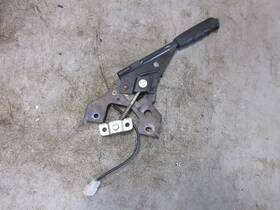
( Brand: Miscellaneous Recreational Vehicles ), ( Model: MISC ), ( Part Type: Emergency Brake ), ( Genuine Oem: Yes ), ( Ipn: 547.zz4096 ), ( Make: Miscellaneous ), ( Descriptionpartcondition: Good Condition, Clean And Ready For Installation. )
Review MISCELLANEOUS RECREATIONAL VEHICLES Subaru Sambar Ks4 Oem Emergency Hand Brake fits 1996
The **1996 Subaru Sambar KS4 Emergency Brake (Part #547.zz4096)** is a meticulously engineered, high-performance component designed to deliver reliable and responsive stopping power for enthusiasts seeking to enhance the braking performance of their classic Subaru Sambar. This emergency brake system, often referred to as a hand brake or parking brake, is a critical safety feature that ensures the vehicle remains stationary when parked on inclines or when left unattended. Crafted with precision and built to withstand the demands of daily use, this brake lever assembly is engineered to provide smooth, consistent engagement with the rear drum brakes, offering both convenience and peace of mind.
The **547.zz4096** is a direct-fit replacement, meticulously designed to match the exact specifications of the original equipment manufacturer (OEM) components found in the 1996 Subaru Sambar KS4. Constructed from durable materials, including high-grade steel and reinforced cables, this emergency brake system is engineered to resist wear and corrosion, ensuring longevity and dependable performance even in harsh driving conditions. The lever mechanism is ergonomically designed for ease of use, allowing drivers to quickly and effortlessly apply or release the brake with minimal effort, reducing fatigue during extended parking or towing scenarios.
One of the standout features of this emergency brake system is its compatibility with the Sambar s rear drum brake setup, which includes self-adjusting mechanisms to compensate for wear on the brake shoes. This self-adjusting feature ensures that the brake shoes remain properly aligned and in optimal contact with the drum, maintaining consistent braking efficiency over time. The cable assembly is carefully calibrated to provide the right amount of tension, preventing premature wear on the brake components while still delivering the stopping power needed for safety.
For those who appreciate both functionality and aesthetics, the **547.zz4096** is also designed to integrate seamlessly with the Sambar s interior, blending practicality with a clean, unobtrusive appearance. The brake lever is positioned within easy reach of the driver s seat, ensuring that it can be accessed without unnecessary strain or distraction. Whether used for everyday parking or as a secondary braking aid during off-road adventures, this emergency brake system is a testament to Subaru s commitment to reliability and driver confidence.
In summary, the **1996 Subaru Sambar KS4 Emergency Brake (Part #547.zz4096)** is an essential upgrade or replacement part for owners looking to restore or enhance the braking capabilities of their vehicle. With its robust construction, precise engineering, and direct-fit compatibility, this component ensures that the Sambar remains a dependable and safe choice for both casual drivers and enthusiasts alike. Whether maintaining originality or upgrading for improved performance, this emergency brake system delivers the reliability and responsiveness needed to keep the Sambar running smoothly for years to come.
### **Pros and Cons of Buying a 1996 Subaru Sambar KS4 (547.zz4096) with Emergency Brake**
#### **Pros**
1. **Compact and Maneuverable Size** The Sambar is a small kei car, making it ideal for tight urban spaces, parking in narrow spots, and navigating congested areas. Its size also contributes to lower fuel consumption.
2. **Fuel Efficiency** As a kei car, the Sambar is designed for efficiency. The 660cc engine typically delivers around **20 25 km/L (city)** and **25 30 km/L (highway)**, depending on driving conditions. This makes it cost-effective for short commutes and daily use.
3. **Low Operating Costs** Kei cars in Japan (and similar markets) often have lower insurance premiums, road taxes, and maintenance expenses compared to larger vehicles. Parts are also generally affordable.
4. **Simple and Reliable Engine** The 660cc air-cooled or water-cooled engines in older Sambars are known for durability, especially if well-maintained. Many owners report long-term reliability with basic upkeep.
5. **Off-Road and Utility Potential** The KS4 model (or similar variants) may have a slightly higher ground clearance or reinforced chassis compared to standard Sambars, making it better suited for light off-road use, gravel roads, or rural areas.
6. **Emergency Brake Functionality** The inclusion of an emergency brake (parking brake) is a practical feature, especially if the car is used in hilly or uneven terrain where the handbrake can prevent rolling.
7. **Resale Value in Niche Markets** While not a high-value classic, Subaru kei cars (especially well-documented ones) can have a dedicated following among collectors or enthusiasts in certain regions.
8. **Easy to Park and Store** Its small footprint makes it convenient for garages, apartment parking, or urban dwellings with limited space.
9. **Low Weight** The car s lightweight nature improves fuel economy and makes it easier to handle in stop-and-go traffic.
10. **Potential for Modifications** Some owners enjoy customizing kei cars with aftermarket parts, such as upgraded exhausts, lighting, or interior tweaks, though modifications may void warranties or insurance coverage.
---
#### **Cons**
1. **Outdated Technology** The 1996 model is **over 25 years old**, meaning it lacks modern safety features like **ABS, airbags (if any), or electronic stability control**. Older models may also have **manual transmissions with poor shift quality** or **clutch issues**.
2. **Poor Visibility** Kei cars often have **small windows, limited rear visibility**, and **narrow windshields**, which can be dangerous in traffic or when reversing.
3. **Comfort Limitations** The interior is **cramped**, with **minimal legroom** and **basic seating**. Long drives or tall passengers may find it uncomfortable. Sound insulation is also poor, leading to **noise from the engine and road**.
4. **Rust and Wear** Many older Japanese cars suffer from **rust, especially in the chassis, wheel wells, and undercarriage**. A thorough inspection is crucial to avoid hidden structural issues.
5. **Limited Power and Performance** The 660cc engine produces **very little power (around 20 30 horsepower)**, making acceleration sluggish. Passing on highways or climbing steep hills can be difficult.
6. **Reliability Concerns** While some kei cars are robust, others may have **failing electrical systems, worn suspension, or leaking fluids**. The **air-cooled engine** (if applicable) can overheat if not maintained properly.
7. **High Mileage Risks** If the car has **excessive mileage (e.g., 300,000 km)**, major components like the **transmission, clutch, or engine** may be near failure. Japanese cars often last long, but wear-and-tear accumulates over time.
8. **Limited Aftermarket Support** While parts exist, finding **specialized mechanics** familiar with kei cars (especially older models) can be challenging outside Japan. Shipping parts internationally may also be costly.
9. **Noisy and Vibrant Ride** The **bare metal body**, **soft suspension**, and **lack of soundproofing** make for a **loud and bouncy** driving experience, especially on rough roads.
10. **Legal and Practical Restrictions** In some countries, **kei cars are restricted from highways** or have **speed limits**. Insurance and registration may also be more difficult to obtain due to their age and classification.
11. **Resale Depreciation** Classic or rare cars may hold value, but a **common 1996 Sambar** will likely depreciate further over time, making it a less attractive long-term investment.
12. **Potential for Hidden Damage** Without a **detailed service history**, it s hard to verify if the car has been **properly maintained**. Rust, frame damage, or engine issues may not be immediately obvious.
---
### **Conclusion**
The **1996 Subaru Sambar KS4** is an interesting purchase for someone seeking a **budget-friendly, fuel-efficient, and space-saving** vehicle particularly for **urban driving, light off-road use, or as a secondary car**. Its **compact size, low running costs, and nostalgic appeal** make it attractive to certain buyers, especially those who prioritize **practicality over comfort or performance**.
However, the **lack of modern safety features, poor visibility, outdated technology, and potential reliability issues** make it a **high-risk, high-reward** choice. It is **not ideal for long-distance driving, highway use, or families** due to its **cramped interior and limited power**. Instead, it suits **individuals who need a simple, cheap-to-run car for short trips, parking in tight spaces, or as a hobbyist project**.
If you are **mechanically inclined and willing to invest time in maintenance**, a well-documented Sambar could be a **fun and economical ride**. But if you expect **modern comforts, safety, or reliability**, a **newer kei car, a used compact car, or a motorcycle** might be a better alternative.
---
### **Recommendation**
**Buy the 1996 Subaru Sambar KS4 only if:**You **need a cheap, ultra-compact car** for **city driving, parking in tight spaces, or rural use**.
You **accept its limitations** (poor comfort, weak power, no modern safety) and are **prepared for maintenance**.
You **find a car with a clean service history**, **no major rust**, and **proven engine/transmission health**.
You **plan to use it sparingly** (e.g., as a secondary vehicle) rather than for daily long commutes.
You **enjoy classic or niche cars** and are okay with **higher upkeep costs** over time.
**Avoid the Sambar if:**You **prioritize safety, comfort, or modern features** (ABS, airbags, climate control).
You **drive long distances frequently** or need **highway-capable performance**.
You **cannot afford or do not want to maintain an older car** (rust repairs, engine work, etc.).
You **need a vehicle for passengers or cargo** (the interior is too small).
You **cannot find a well-documented example** with **full service records**.
**Alternative Options to Consider:**- **Newer Kei Car (e.g., Honda N-BOX, Toyota Pixis Van)** More reliable, slightly better equipped.
- **Used Compact Car (e.g., Toyota Yaris, Honda Fit)** More comfortable, safer, and still fuel-efficient.
- **Motorcycle or Scooter** If space and cost are the main concerns, a two-wheeler may be more practical.
- **Restored Classic Car** If you love the Sambar, consider **restoring a better-documented example** rather than buying a "project car."
**Final Verdict:**The **1996 Subaru Sambar KS4 is a viable purchase for the right buyer** one who values **space efficiency, low cost, and simplicity** over modern amenities. However, it is **not a practical choice for most drivers seeking a reliable, safe, or comfortable vehicle**. **Test drive thoroughly, inspect for rust and mechanical issues, and ensure you can maintain it long-term** before committing. If you can find a **well-preserved example with a service history**, it could be a fun and economical ride. Otherwise, consider more modern alternatives.
Details:
See all parts from this vehicle. 1996 Subaru Sambar KS4 OEM Emergency Hand Brake Donor Vehicle model: MISC Year: 1996 Mileage: not available or unknown Stock Number: KV2050 Notes: Good condition, clean, and ready for installation. See more MISC parts.
Product Detail Good condition, clean and ready for installation.
specifications parkingbrakecablesaz:
- for makes: Subaru
- for years: 1996
- brand: Miscellaneous Recreational Vehicles
- model: Misc
- part type: Emergency Brake
- genuine oem: Yes
- ipn: 547.zz4096
- make: Miscellaneous
- descriptionpartcondition: Good Condition, Clean And Ready For Installation.
offer parkingbrakecablesaz:
- availability: In Stock
- sold: 0
- quantity: 1
- options: Ship-to-home
- best offers: True
- started: February 19, 2026
seller parkingbrakecablesaz:
- rating: 100.0%
- city: Paterson, New Jersey
- # reviews: 6074
shipping parkingbrakecablesaz:
- class: Standard
- service: Standard
- type: Fixed
- transit: 2-6 Days
- cost: $0.00
general parkingbrakecablesaz:
- condition: Used
- Car Truck Parts Accessories > Brakes Brake Parts > Brake Cables
payments parkingbrakecablesaz:
- wallet: Google-pay
- other
- credit card: Visa
returns parkingbrakecablesaz:
- time: 30 Days
- paid by: Buyer
- policy: Returns Accepted
Miscellaneous Recreational Vehicles Is Similar To:
- Miscellaneous 2-11104 Parking Brake Cable P n (36.9% similar) Parking brake cable p/n 2-11104. Condition is new. Shipped with USPS priority mail...(March 6th, 2025)