KAWASAKI 54005-4003 Brake Cable
fits model: Klt200. make: Kawasaki. year: 1981–1983.
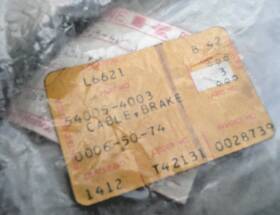
( Manufacturer Part Number: 54005-4003 ), ( Type: Brake Cable Kit ), ( Vintage Part: Yes ), ( Universal Fitment: No ), ( California Prop 65 Warning: Cancer And Reproductive Harm Www.p65warnings.ca.gov )
Review KAWASAKI To Brake Cable Part fits KLT200 1981–1983
The **Kawasaki 54005-4003 brake cable** is a meticulously engineered, high-performance component designed exclusively for the **1981 and 1983 Kawasaki KL200** motorcycle, a classic dual-sport adventure bike renowned for its rugged reliability and timeless appeal. This brake cable is a direct OEM replacement, ensuring an exact fit with the original specifications, including the precise length, gauge, and routing required to maintain optimal braking performance and handling. Crafted from durable, corrosion-resistant steel wire, the cable features a smooth, polished outer sheath that resists wear and prevents fraying, even under the demanding conditions of off-road riding or prolonged use on paved surfaces. The inner strands are tightly braided to minimize stretch and maintain consistent tension, which is critical for precise modulation and responsive braking especially important for the KL200 s lightweight yet agile chassis. The cable s robust construction also includes a reinforced outer housing with a protective rubber coating at critical points, shielding it from abrasion where it passes through the frame or through the brake lever housing. This attention to detail ensures longevity, reducing the likelihood of premature failure or the need for frequent adjustments. Whether you re restoring a vintage KL200 to its original glory or maintaining one as part of a well-kept collection, this brake cable delivers the reliability and performance expected from Kawasaki s legendary engineering. Its compatibility with both the front and rear brake systems of the KL200 makes it an essential upgrade for riders seeking to enhance safety and confidence in their ride, while also preserving the bike s authentic character.
**Pros and Cons of Buying a Used Kawasaki KLT200 Brake Cable (Part Number: 54005-4003, Models: 1981 1983)**
### **Pros**
1. **Cost-Effective Solution** Purchasing a used brake cable is significantly cheaper than buying a new OEM part, which can be expensive or difficult to source for older models. This makes it a practical choice for budget-conscious riders.
2. **Functionality** If the cable is in good condition, it will perform the same basic function as a new one, allowing the brake lever to operate smoothly and effectively. For many riders, especially those who prioritize reliability over aesthetics, a used cable can be fully adequate.
3. **Availability** Since OEM brake cables for these older Kawasaki models are no longer widely produced, a used cable may be the only viable option for restoring or maintaining the bike. This avoids the hassle of searching for rare aftermarket replacements.
4. **Minimal Modification Needed** If the cable is compatible with the bike s brake system (e.g., correct length, threading, and attachment points), installation is straightforward and may not require additional parts like new brake pads or a master cylinder overhaul.
5. **Environmental Consideration** Reusing a functional part reduces waste, aligning with a more sustainable approach to motorcycle maintenance.
---
### **Cons**
1. **Reliability Concerns** Used brake cables, even if visually intact, may have internal corrosion, frayed strands, or wear that compromises braking performance. A worn cable can lead to a spongy lever, reduced stopping power, or even failure, posing a safety risk.
2. **Unknown Service History** Without access to the cable s maintenance records, it s impossible to confirm whether it has been properly lubricated, adjusted, or replaced in the past. Neglect can accelerate wear and reduce lifespan.
3. **Potential for Misalignment or Damage** If the cable has been improperly stored or installed before, it might be bent, stretched, or misaligned, leading to inconsistent brake operation. This could require additional adjustments or even replacement of other components (e.g., brake shoes or the master cylinder).
4. **Compatibility Issues** While the part number suggests compatibility, slight variations in design (e.g., threading, attachment points, or length) between years or models could make installation difficult. Cross-referencing with the bike s service manual is essential.
5. **Limited Warranty or Return Options** Purchasing from a private seller or a used parts dealer typically means no warranty or return policy. If the cable fails shortly after installation, the buyer bears the full cost of replacement.
6. **Safety Risks** Brake failure is a critical safety issue. If the cable is compromised, the consequences of a malfunction could be severe, especially at higher speeds or in emergency stops.
---
### **Conclusion**
Buying a used Kawasaki KLT200 brake cable (54005-4003) can be a practical and economical choice for riders who prioritize cost savings and have the time to inspect and maintain the part thoroughly. However, the risks associated with reliability, unknown condition, and potential safety hazards make it a less ideal option compared to a new or high-quality aftermarket replacement.
For most riders, the peace of mind and safety benefits of a new cable even if more expensive far outweigh the cost savings of a used one. If a used cable is the only option, it should be inspected for corrosion, flexibility, and proper operation before installation, and the bike s brake system should be tested rigorously afterward.
---
### **Recommendation**
1. **Prioritize Safety Over Cost**: If possible, invest in a new OEM or aftermarket brake cable from a reputable supplier. Brands like **DID, Brakesmith, or ACDelco** offer durable, reliable alternatives that come with warranties.
2. **Inspect Thoroughly**: If purchasing used, carefully examine the cable for rust, fraying, or stiffness. Test the lever for smooth operation and check for proper tension. Consider having a mechanic inspect it before installation.
3. **Consider Alternatives**: If the cable is the only failing part, evaluate whether other components (e.g., brake shoes, master cylinder) need replacement. A full brake service may be more cost-effective in the long run.
4. **Buy from Trusted Sources**: If buying used, prefer sellers with return policies or warranties (e.g., motorcycle parts dealers rather than private listings). Avoid cables that have been stored improperly (e.g., in damp conditions).
5. **Test After Installation**: Always test the brakes thoroughly after replacing the cable, including checking for proper lever feel, consistent stopping power, and no unusual noises or vibrations.
**Final Verdict**: Unless you are certain of the cable s condition and have no other options, a new brake cable is the safer and more reliable choice for a KLT200. A used cable can work, but it requires extra caution and due diligence.
Details:
Unused rear brake cable for the 1981 to 1983 Kawasaki KLT200.
part #: 540054003 prices
- $15.00-$24.99
specifications parkingbrakecablesaz:
- for models: Klt200
- for makes: Kawasaki
- for years: 1981-1983
- mpn: 54005-4003
- type: Brake Cable Kit
- vintage part: Yes
- universal fitment: No
- california prop 65 warning: Cancer And Reproductive Harm Www.p65warnings.ca.gov
shipping parkingbrakecablesaz:
- class: Economy
- service: Economy
- cost: $0.00
- type: Fixed
- transit: 4-9 Days
general parkingbrakecablesaz:
- condition: Used
- Car Truck Parts Accessories > Brakes Brake Parts > Brake Cables
payments parkingbrakecablesaz:
- other
- wallet: Apple-pay
- credit card: Discover
returns parkingbrakecablesaz:
- paid by: Buyer
- time: 30 Days
- policy: Returns Accepted
offer parkingbrakecablesaz:
- options: Ship-to-home
- started: May 14, 2026
- sold: 0
- quantity: 1
- best offers: True
- availability: In Stock
seller parkingbrakecablesaz:
- # reviews: 18547
- city: Farmington, Maine
- rating: 100.0%
Kawasaki 54005-4003 Is Similar To:
- Kawasaki 54005-1160 Oem Nos Cable Parking Brake (57.9% similar) USPS has been known to disappoint from time. I also expect buyer to verify their needs. There may be some shelf wear. There are rare exceptions when I am chasing more inventory where it is not out within 24 hours, but those. If you re not satisfied, I will do whatever can within reason to resolve ...(May 4th, 2025)
- Kawasaki 54010-1073 Oem Nos Cable Reverse (51.5% similar) I don't have a secret stash of extra parts. When I get new inventory, try to list it asap. If its listed I have it, if not do not it. They have provided clarification for buyers below. The quantity is. There are rare exceptions when I am chasing more inventory where it is not out within 24 hours, ...(May 4th, 2025)
- Kawasaki 54017-1155 Oem Nos Cable Choke (46.5% similar) It comes down to the inventory constantly being rotated and refreshed. If its listed I have it, if not do not it. There may be some shelf wear. The idea is to under promise and over deliver. They have provided clarification for buyers below. Aka nos these parts have been sitting on a dealers shelves...(May 4th, 2025)
- Kawasaki 54012-0127 Oem Nos Cable Throttle (51% similar) The quantity is. That being said, I am constantly getting new inventory and back filling existing. Genuine kawasaki new old stock parts here. I aim to please. Please refer to time frames listed above make your decision and or follow up if not received. Aka nos these parts have been sitting on a ...(May 5th, 2025)
- Kawasaki 54005-0309 Oem Nos Cable L Rear Brake (56.1% similar) Please refer to time frames listed above make your decision and or follow up if not received. This is not trickery, or anything. Genuine kawasaki new old stock parts here. I aim to please. When I get new inventory, try to list it asap. There may be some shelf wear. I don't have a secret stash of ...(May 5th, 2025)
- Kawasaki 54005-1157 Oem Nos Cable Rear Brake (55.8% similar) Aka nos these parts have been sitting on a dealers shelves for years, so there may be some dust. This is not trickery, or anything. These listings have been uploaded with stock photo. That being said, I am constantly getting new inventory and back filling existing. Please refer to time frames listed...(November 27th, 2025)
- Kawasaki 54005-1001 Oem Fits Kh100 G3tr G3ss Ga5 Front Brake Cable Nos Genuine 54005-033 (52.7% similar) Made in japan, this vintage part ensures quality and compatibility with kawasaki vehicles. The oem kawasaki front brake cable is a genuine part designed to fit specific model's such as KH100EL, G3TR, G3SS, and GA5...(February 21st, 2026)