JEEP 52000-861 Parking Brake Release Cable Handle Cable/handle
fits model: Xj, Cherokee. make: Jeep. year: 1991–1996.
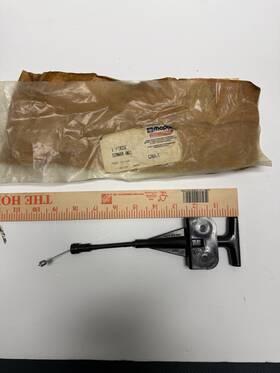
( Manufacturer Part Number: 52000-861 ), ( Type: Parking Brake Release ), ( Vintage Part: Yes ), ( Universal Fitment: No ), ( Country Of Origin: United States )
Review JEEP Parking Brake Release Cable/handle Read fits CHEROKEE XJ 1991–1996
The **Jeep 52000-861 Parking Brake Release Cable/Handle Assembly** is a meticulously engineered component designed specifically for the **1991 1996 Jeep Cherokee XJ** platform, ensuring seamless integration with the vehicle s mechanical braking system. This high-quality replacement part is crafted to replicate the original equipment manufacturer (OEM) specifications, delivering reliable performance and durability for both on-road and off-road adventures. The cable and handle assembly is built with robust, corrosion-resistant materials, including hardened steel for the cable itself and a reinforced, ergonomic handle that resists wear from frequent use. The design features a smooth, low-friction mechanism to prevent premature cable stretch or binding, which is critical for maintaining consistent parking brake engagement and release. Whether you re navigating steep inclines, rough terrain, or simply parking on uneven surfaces, this aftermarket upgrade provides the confidence of a secure, responsive parking brake system. Its precise fitment ensures compatibility with the XJ s brake pedal linkage and cable routing, minimizing the risk of misalignment or improper function. Ideal for restoration projects, maintenance upgrades, or as a direct replacement for worn-out components, this cable/handle assembly is a dependable choice for Jeep enthusiasts seeking both performance and longevity.
### Pros and Cons of Buying a Jeep Cherokee XJ (1991 1996) with a Parking Brake Release Cable/Handle Issue
#### **Pros**
1. **Affordability** The Jeep Cherokee XJ (1991 1996) is a budget-friendly used vehicle, making it accessible for buyers on a limited budget. Parts and labor are also relatively inexpensive compared to newer models.
2. **Reliability (with proper maintenance)** The XJ Cherokee is known for its durable engine (especially the 4.0L Magnum V6 and 2.5L I4) and solid frame construction. Many models last well over 200,000 miles with basic upkeep.
3. **Off-Road Capability** The XJ Cherokee was designed for light off-roading, with features like a solid rear axle, part-time 4WD, and a high ground clearance. This makes it a practical choice for rural or rough-terrain driving.
4. **Availability of Parts** Since the XJ was produced for over a decade, parts are widely available, both new and used. This makes repairs and modifications easier and less expensive.
5. **Classic Appeal** For enthusiasts, the XJ Cherokee has a cult following. Its boxy, utilitarian design and rugged styling make it a nostalgic or collectible choice for some buyers.
6. **Simple Mechanics** Compared to modern vehicles, the XJ Cherokee has straightforward mechanical systems, which can be easier to diagnose and fix without specialized tools.
7. **Potential for Modifications** The XJ platform is popular among DIYers, allowing for aftermarket upgrades like suspension lifts, engine swaps, or interior customizations.
---
#### **Cons**
1. **Parking Brake Issues** A faulty parking brake cable or handle is a **major safety concern**. If the parking brake fails, the vehicle could roll unintentionally, leading to accidents or damage. This is not a minor fix it requires proper inspection and replacement to ensure safety.
2. **Rust and Corrosion** Many XJ Cherokees, especially those from the early '90s, suffer from rust in critical areas like the frame, subframe, and wheel wells. Rust can compromise structural integrity and lead to costly repairs.
3. **Electrical Problems** Older Jeeps are notorious for electrical gremlins, including faulty wiring, failing alternators, or intermittent issues with lights and accessories. These problems can be difficult to diagnose and repair.
4. **Transmission Wear** The 4-speed automatic (A413) and 5-speed manual transmissions in the XJ can wear out over time, especially if not properly maintained. Fluid leaks and rough shifting are common complaints.
5. **Suspension and Steering Wear** Bushings, ball joints, and control arms often fail due to age and rough driving conditions. This can lead to poor handling, clunking noises, and uneven tire wear.
6. **Fuel System Issues** Carbureted models (pre-1993) are prone to fuel pump failures, while later EFI models can develop vacuum leaks or sensor problems. Fuel injectors may also clog over time.
7. **Interior Wear** The fabric and plastics in older XJs degrade quickly, especially in high-mileage examples. Reupholstering seats or replacing dash panels can be expensive.
8. **Emissions and Modern Compliance** If you plan to drive the Jeep in areas with strict emissions regulations, you may need to invest in smog-related repairs or consider a cleaner-running model.
9. **Resale Value** The XJ Cherokee does not hold its value well. Even well-maintained examples depreciate quickly, making it a poor long-term investment if you plan to sell later.
10. **Safety Standards** Modern safety features (airbags, stability control, advanced braking systems) are absent in the XJ. Older models lack modern crash protection, which is a concern in collisions.
---
### **Ending Conclusion**
Buying a **1991 1996 Jeep Cherokee XJ with a parking brake issue** can be a good deal if you address the safety concern immediately and are prepared for potential mechanical challenges. The vehicle offers affordability, off-road capability, and a loyal fanbase, but it requires **proactive maintenance** to avoid costly repairs down the line.
The **parking brake failure is the most critical issue** this is not a cosmetic or minor fix. If the seller cannot provide proof that the parking brake has been professionally inspected and repaired, **walk away**. A properly functioning parking brake is non-negotiable for safety.
If you decide to proceed, **budget for:**- Immediate parking brake replacement (cable, handle, and adjustment).
- Rust repairs (if present).
- Transmission and suspension inspections.
- Electrical system checks.
For buyers who prioritize **low cost, off-road utility, and DIY projects**, the XJ Cherokee can be a rewarding purchase. However, if you value **modern safety, reliability, and low maintenance**, a newer used SUV or truck may be a better choice.
### **Recommendation**
- **If you are experienced with vehicle repairs and can afford unexpected fixes**, buy the XJ Cherokee **only after verifying the parking brake is fully functional** and inspecting for rust and mechanical wear.
- **If you are inexperienced or unwilling to tackle major repairs**, consider a **newer used SUV** (e.g., a 2000s-era Ford Explorer, Chevrolet Tahoe, or Toyota 4Runner) for better safety and reliability.
- **If you love the XJ platform and want a project car**, buy it **with cash**, set aside a repair fund, and prioritize safety modifications first.
Ultimately, the XJ Cherokee can be a great vehicle for the right buyer but it demands **respect, maintenance, and patience**.
Details:
Compare it to your old one. I think Cherokee Xj 91-96.
part #: 52000861 prices
- $20.49-$39.99
specifications parkingbrakecablesaz:
- for models: Xj, Cherokee
- for makes: Jeep
- for years: 1991-1996
- mpn: 52000-861
- type: Parking Brake Release
- vintage part: Yes
- universal fitment: No
- country of origin: United States
seller parkingbrakecablesaz:
- # reviews: 275
- rating: 100.0%
- city: San Jose, California
payments parkingbrakecablesaz:
- other
- wallet: Google-pay
- credit card: Mastercard
returns parkingbrakecablesaz:
- time: 30 Days
- policy: Returns Accepted
- paid by: Seller
general parkingbrakecablesaz:
- Car Truck Parts Accessories > Brakes Brake Parts > Brake Cables
- condition: New other see details
shipping parkingbrakecablesaz:
- service: USPS Ground Advantage
- transit: 3-8 Days
- cost: $5.52
- carrier: USPS
- type: Calculated
- class: Standard
offer parkingbrakecablesaz:
- best offers: True
- availability: In Stock
- options: Ship-to-home
- sold: 0
- started: April 21, 2026
- quantity: 1
Jeep 52000-861 Is Similar To:
- 026356-147b3 Mopar Jeep Wrangler Jk Jku Parking Emergency Brake Handle Lever (41.3% similar) Items are all cores and will most likely need to be refinished. If this is not the case, offer listing will state otherwise. XA0 there are some scratches on the handles covering which can be seen in photos. Therefore, the older part, more wear you can expect. Please match part numbers before ...(February 14th, 2019)
- 031187-300b4 Mopar Jeep Wrangler Jk Jku Parking Emergency Brake Handle Lever (41.3% similar) This does not mean it is ready to be installed on your vehicle. Free flat rate shipping if offered is for the lower 48 us. Therefore, the older part, more wear you can expect. There are some scratches on the handles covering which can be seen in photos. If this is not the case, offer listing will ...(January 4th, 2019)
- 04 Jeep Grand Cherokee Emergency (31% similar) Installation of parts in any non-stock application off-road racing, conversion, fleet or commercial application, etc. Used engines guaranteed against rod knock, excessive smoking, and oil consumption. Flush cooling system and refill to appropriate level. These are left on the engine for installers ...(October 4th, 2017)
- 055717-224b5 Jeep Wrangler Jk Emergency Parking Brake Handle Lever Oem (42.9% similar) Other s: stores. Mercedes s: stores. Free flat rate shipping if offered is for the lower 48 us. Free flat rate shipping if offered is for the lower 48 us. Got s: stores. Gasoline junkies European. Gasoline junkies BMW. European s: stores. Therefore, the older part, more wear you can expect. Jaguar s...(October 25th, 2018)
- 057932 356a2 Jeep Wrangler Jk Emergency Parking Brake Handle Lever Assembly (41.5% similar) ...(March 25th, 2019)
- GENUINE OEM MOPAR JEEP EMERGENCY BRAKE LEVER ASSEMBLY 1-520789443AC (9.2% similar) This is a new genuine Mopar jeep emergency brake complete assembly with cable ,1-520789843AC,FREE shipping...(April 5th, 2014)
- 1-52128510ag Jeep Parking Emergency Brake (28.8% similar) Free shipping applies only to the continental us. Please with any questions regarding part fit, condition or shipping quotes...(August 10th, 2017)
- Liberty Cable Jeep Passengers Emergency 02 Brake 13996 1 (24.3% similar) If an item arrives damaged, please through within 24 hrs for instructions. No expedited shipping is available. N new part manufactured from scratch...(January 28th, 2015)
- Omix-Ada 16730.40 Emergency Brake Cable 99-01 Jeep Grand Cherokee WJ (19.5% similar) Mix-Ada 16730. Limited five year manufacturer's warranty. Manufacturer: mix-Ada part number: 16730...(February 4th, 2014)
- Brake Cj 16730.09 Cable Omix-ada Jeep Parking 1978-1986 Emergency (22.8% similar) Limited five year manufacturer's warranty. 5 inch parking brake cable from mix Ada fits the left side on jeep JCS with 10 inch brakes. Parking brake cable, left, 78 80 jeep ck model's this 60...(December 22nd, 2014)
- Cj Cable 52-64 brake 16730.14 120 Omix-ada Jeep (24.2% similar) ...(August 11th, 2014)