BMW 2227557 Parking Emergency Brake Handbrake Wood
fits model: E36, 318i, 328i, M3, Z3. make: Bmw. year: 1994–1999.
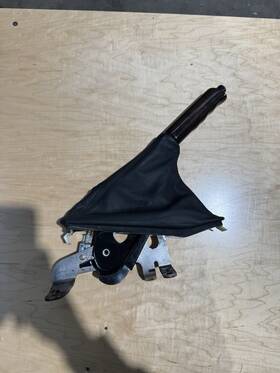
( Manufacturer Part Number: 2227557 ), ( Type: Brake Cable Kit ), ( Brand Type: Genuine Oem ), ( Manufacturer Warranty: No Warranty ), ( Year Range: 1994 1995 1996 1997 1998 1999 94 95 96 97 98 99 ), ( Country Of Manufacture: De ), ( Universal Fitment: No ), ( Placement On Vehicle: Front )
Review BMW Parking Emergency Brake Handbrake Wood fits E36 318I 328I M3 Z3 1994–1999
The **BMW 2227557** is a meticulously crafted aftermarket replacement for the iconic **E36 3-Series (1994 1999) 318i, 328i, M3, and Z3**, serving as the perfect upgrade for the parking emergency brake, or handbrake, mechanism. Engineered with precision and designed to seamlessly integrate with the vehicle s robust chassis, this component is crafted from high-quality, durable materials, ensuring both longevity and reliability. The handbrake lever is constructed from polished wood a blend of natural aesthetics and functional strength offering a refined, premium feel that complements the sporty heritage of the E36 lineup. The wood is carefully selected for its density and resistance to wear, while the internal mechanism remains robust, featuring a smooth, responsive cable system that delivers consistent braking power without sagging or corrosion. Whether installed in a classic 318i with its understated elegance or a high-performance M3 with its aggressive stance, this handbrake enhances both the vehicle s character and its practicality. Ideal for enthusiasts who appreciate a balance of vintage charm and modern functionality, this part is a straightforward yet impactful modification that elevates the driving experience while maintaining the authenticity of the original BMW design.
### **Pros and Cons of Buying a BMW E36 (1994 1999) 318i/328i/M3/Z3 with a Wooden Handbrake/Parking Brake**
#### **Pros**
1. **Classic BMW Driving Experience**
- The E36 series (1994 1999) is widely regarded as one of BMW s most driver-focused and enjoyable models. The 318i (1.9L inline-4) and 328i (3.0L inline-6) offer engaging handling, precise steering, and a well-balanced chassis. The M3 (S50 engine) is a legendary performance car with a naturally aspirated 3.2L inline-6 producing around 321 hp, making it one of the fastest production cars of its era.
2. **Strong Engine Options**
- **318i (M50B19):** A reliable inline-4 with good power (140 150 hp) and a smooth ride. Later models (1996 ) had improved emissions compliance without major power loss.
- **328i (M52B30):** A more refined inline-6 (170 192 hp) with better torque and a more premium feel. The M52 is one of BMW s most durable engines if maintained properly.
- **M3 (S50B32):** A high-revving, naturally aspirated inline-6 with a manual transmission (or optional Getrag 6-speed auto). The S50 is a legendary engine with a long lifespan if cared for, though it demands more attention than the inline-4 or -6.
3. **Timeless Design and Build Quality**
- The E36 s styling is iconic, blending BMW s signature aesthetics with a more approachable, roadster-like silhouette (especially the Z3). The interior, while dated by modern standards, has a premium feel with high-quality materials (especially in higher trims).
- The manual transmissions (especially the Getrag 6-speed in the M3) are legendary for their smoothness and engagement.
4. **Aftermarket and Modding Potential**
- The E36 has a massive aftermarket, with support for performance upgrades (intake/exhaust, suspension, engine tuning), cosmetic modifications, and restoration parts. The M3 in particular is a favorite for tuning, with options ranging from mild power increases to full turbo conversions.
- The Z3 (roadster/coupe) is highly customizable, with a lightweight chassis that responds well to modifications.
5. **Reliability (With Proper Maintenance)**
- The E36 s inline-4 (M50) and inline-6 (M52) engines are robust if maintained. The M50 is known for its longevity, while the M52 is more refined but can suffer from oil consumption if neglected. The S50 in the M3 is durable but requires more frequent attention (valve springs, oil changes, etc.).
- The E36 s suspension (MacPherson struts, multi-link rear) is simple and repairable, though wear items like bushings and shocks should be checked regularly.
6. **Collectibility and Nostalgia**
- The E36, especially the M3 and Z3, has strong collector value. Early models (pre-1996) are rarer and more desirable, while later models (1997 1999) are more accessible. The Z3, in particular, holds its value well due to its roadster appeal.
- Owning a classic BMW from this era is a nostalgic experience, appealing to enthusiasts who appreciate the era s engineering and design.
7. **Wooden Handbrake/Parking Brake**
- The wooden handbrake (common in early E36s) is a quirky, retro feature that adds character. While it may seem impractical, it s not a major issue modern handbrakes are just more convenient. The parking brake function is typically handled by the handbrake or an electric parking brake (in later models).
---
#### **Cons**
1. **Aging Mechanical Components**
- **Suspension:** The E36 s suspension (especially the front MacPherson struts) can wear out over time, leading to clunks, bottoming out, or poor handling. Rear bushings and shocks also degrade and should be replaced periodically.
- **Steering:** Power steering fluid leaks and worn rack mounts are common issues, especially in higher-mileage examples.
- **Exhaust:** Rust can develop in the exhaust system, particularly in the muffler and downpipes. The M3 s exhaust is more prone to this due to its higher heat output.
2. **Engine-Specific Issues**
- **M50B19 (318i):** While reliable, it can suffer from oil leaks (valve cover gasket, oil filter housing gasket) and occasional timing chain stretch. Later M50B19 engines (post-1996) have improved emissions compliance but may have slightly reduced power.
- **M52B30 (328i):** Oil consumption is a known issue, especially in higher-mileage examples. The oil filter housing gasket and valve cover gasket can leak. The M52 is more refined but less forgiving than the M50.
- **S50B32 (M3):** The most demanding engine in this lineup. Common issues include:- **Valve springs** (can wear out around 100,000 150,000 miles, requiring a valve spring job).
- **Oil consumption** (the S50 is thirsty; check oil levels frequently).
- **Timing chain stretch** (less common than in earlier BMWs but still a risk).
- **Water pump and thermostat failures** (can lead to overheating).
- **Exhaust manifold cracks** (especially on the passenger side).
- **Z3 Engines:** The Z3 shares the same engines as the E36 (M50, M52, or S50 in the Z3 M), so the same issues apply. The roadster/coupe body style is more prone to rust (especially in the floor pans and rear quarter panels).
3. **Rust and Bodywork**
- The E36 and Z3 are prone to rust, particularly in:- **Wheel arches** (common in older examples).
- **Floor pans** (especially in the Z3 roadster).
- **Rear quarter panels** (common in higher-mileage cars).
- **Exhaust system** (rust can eat through mufflers and downpipes).
- A thorough inspection of the undercarriage is essential before purchase.
4. **Electrical and Interior Wear**
- **Electrical gremlins** are common in older BMWs, including faulty sensors, intermittent wiring issues, and failing components (e.g., window regulators, door locks).
- **Interior wear** is expected in a 20 year-old car. Upholstery, carpets, and plastics may show signs of aging. The Z3 s interior is more basic than the E36 s, with less premium feel.
- **Climate control issues** (especially in the 328i and M3) can be problematic due to aging seals and electrical failures.
5. **Maintenance Costs**
- While not as expensive as modern BMWs, the E36 still requires regular maintenance to stay reliable. Key items include:- **Timing belt/chain** (M50/M52: belt; S50: chain both should be checked).
- **Suspension components** (bushings, shocks, struts).
- **Exhaust system** (rust repairs can be costly).
- **Engine upkeep** (oil changes, valve spring job for S50, gasket replacements).
- Labor costs can add up, especially if working with a specialist.
6. **Fuel Economy and Modern Standards**
- The E36 s fuel economy is poor by today s standards:- **318i:** 18 22 MPG (city/highway).
- **328i:** 16 20 MPG.
- **M3:** 14 18 MPG (manual).
- Modern fuel prices make ownership more expensive than a comparable modern car.
7. **Insurance and Registration Costs**
- Classic BMWs (especially the M3 and Z3) can be expensive to insure, particularly for younger or inexperienced drivers. Some insurers classify them as "sports cars" with higher premiums.
- Registration fees may also be higher due to the car s value and performance.
8. **Wooden Handbrake/Parking Brake Limitations**
- The wooden handbrake is not as effective as a modern hydraulic or electric parking brake. It may not hold well on steep hills or in heavy traffic.
- The parking brake function is often secondary to the handbrake, meaning you may need to rely on the handbrake for parking, which can be less convenient.
---
### **Conclusion**
Buying a BMW E36 (1994 1999) 318i/328i/M3/Z3 with a wooden handbrake/parking brake can be an incredibly rewarding experience for
Details:
In working condition, no major damage. Came off of E36 BMW M3 with 73k miles.
part #: 2227557 prices
- $70.00-$130.50
specifications parkingbrakecablesaz:
- for models: E36, 318i, 328i, M3, Z3
- for makes: Bmw
- for years: 1994-1999
- mpn: 2227557
- type: Brake Cable Kit
- brand type: Genuine Oem
- manufacturer warranty: No Warranty
- year range: 1994 1995 1996 1997 1998 1999 94 95 96 97 98 99
- country of manufacture: De
- universal fitment: No
- placement on vehicle: Front
general parkingbrakecablesaz:
- condition: Used
- Car Truck Parts Accessories > Brakes Brake Parts > Brake Cables
seller parkingbrakecablesaz:
- # reviews: 136
- rating: 98.3%
- city: Saint Louis, Missouri
payments parkingbrakecablesaz:
- credit card: Discover
- other
- wallet: Google-pay
returns parkingbrakecablesaz:
- policy: No Returns
shipping parkingbrakecablesaz:
- type: Calculated
- service: USPS Ground Advantage
- cost: $9.58
- transit: 4-10 Days
- carrier: USPS
- class: Standard
offer parkingbrakecablesaz:
- options: Ship-to-home
- best offers: True
- availability: In Stock
- quantity: 1
- sold: 0
- started: May 4, 2026
Bmw 2227557 Is Similar To:
- BMW E65 E66 02-08 Gear Repair Kit for Parking Brake Actuator ODOMETER GEARS (34% similar) 2 gears, 1 roll pin, 1 press tool. Bmw part # 09 5584 010 made by odometer gears ltd if you are not sure about the part fitting your car, please e-mail us your car's vain. Bmw E65 E66 02-08 gear repair kit for parking brake actuator odometer gears ltd part fits: gear repair kit for parking brake ...(March 29th, 2014)
- BMW E90 E91 06-08 Brake Air Duct Front LEFT Air Channel for Brakes GENUINE (25% similar) Bmw part # 51 71 7/1 21 569 genuine bmw part, oem if you are not sure about the part fitting your car, please e-mail us your car's vain. Bmw E90 E91 2006 -2008 brake air duct front left air channel for brakes genuine part fits: brake air duct left driver side front air channel for brakes brand new ...(February 28th, 2014)
- 1163963 97 540i E39 Oem Emergency Bmw Brake Handle Boot (48.9% similar) Included part number visit . This part has been confirmed to be compatible with these cars check the item specifics section at the top of this listing for more compatibility information. Bmw 540I E39 emergency brake handle w boot oem this part was originally installed in a 1997 540I...(September 21st, 2014)
- 1165961 Bmw Parking Brake Actuator Assembly Oem (32.5% similar) It has normal wear of use because is a used part. You can through message...(January 14th, 2019)
- 12302 Wd Express Febi Parking Brake Cable Fits Bmw Mfg Number (38% similar) ...(March 5th, 2019)
- 12303 Febi New Bmw Parking Brake (31.5% similar) More detailed information is available in the compatibility's section above. Cores: any cores must be in rebuild able condition with sufficient parts to rebuild said core rust, corrosion, OK. 95 and is only available to the USA. Emergency brake cable 2 per car LHS Rh are the same. Fitment please see...(February 11th, 2017)
- 13599911 2014 Bmw 320 Emergency Brake Handle Base E 3 Series Hand Black (40.8% similar) Create listings that get noticed. Therefore, defective electronic parts are eligible for exchange only, unless a replacement cannot be sourced. Replacement only for defective merchandise. To anywhere in the lower 48 states only. Shipping on most parts is done via FedEx ground. No bids outside this ...(February 2nd, 2016)
- 89 Emergency 14637 535i Series Brake Handle 525i E34 90 Parking Bmw (33.6% similar) ...(September 2nd, 2014)
- BMW E21 1977-1983 Parking Brake Cable 1 year Warranty (39.1% similar) Bmw E21 1977 -1983 parking brake cable part fits: parking brake cable brand new part with full 1 year warranty...(February 23rd, 2014)
- 1997-2003 BMW E39 525 528 530 540 PARKING HAND BRAKE CABLE LEFT amp RIGHT PAIR OEM (21.3% similar) The part looks exactly as on the picture. Expedited shipping is available for most items. Item for sale: E39-9 1997 -2003 bmw E39 525 528 530 540 parking hand brake cable left & right pair oem all parts are in good working condition and were tested before removal from the vehicle this is original ...(March 24th, 2014)
- BMW E65 E66 2002-2008 Parking Brake Cable RIGHT Passenger Side GENUINE (36% similar) Bmw E65 E66 2002 -2008 parking brake cable right passenger side genuine part fits: genuine parking brake cable right passenger side brand new part with full 1 year warranty. Bmw part # 34 43 6/7 80 017IF you are not sure about the part fitting your car, please e-mail us your car's vain...(February 27th, 2014)